The short answer
Establishment control and position control are the same discipline under two names. Both mean: controlling headcount cost by controlling the number of approved, funded posts — and reconciling who's actually in them against what the budget authorised. "Establishment control" is the term used across the UK, Ireland, Australia, New Zealand, and much of the Commonwealth public sector; "position control" is the North American term for the identical practice.
One line to remember: your establishment is the set of funded posts you're authorised to fill. Establishment control is keeping actual headcount and cost inside that authorised figure. That's position control by another name.
What "the establishment" means
In UK and Commonwealth usage, the establishment is the total number of funded posts an organisation is authorised to carry — the approved headcount, whether or not every post is currently filled. A post that's funded and approved is "on the establishment." Recruiting beyond it is going "over establishment," and every recognised organisation watches that line because it's where budget overruns start.
The recurring questions are financial, and they're the same ones position control asks:
- How many posts are we funded and authorised to carry?
- Which are filled, vacant, part-filled, or over-established right now?
- What does our established headcount cost, and how does that compare to actual spend?
- If we filled every vacancy tomorrow, what would that add to the pay budget?
Who uses the term
Establishment control is the everyday language of headcount management in the public and not-for-profit sector across the Commonwealth: local councils, the NHS and health boards, universities and further-education colleges, the civil service, police and emergency services, and larger charities. In each, a budget authorises a specific establishment and staying within it is a fiscal control, not an option. It's the same reason position control dominates US government and school districts — the vocabulary differs, the discipline is identical.
Same discipline, different vocabulary
Post (UK/Commonwealth) = position (North America) — the funded slot, tracked whether or not it's filled.
The establishment = the approved, funded headcount — your total authorised positions.
Over establishment = overfilled / over-budget headcount — carrying more than authorised.
Establishment control = position control — the whole practice of holding headcount and cost to the funded figure.
Where PowerPCS fits
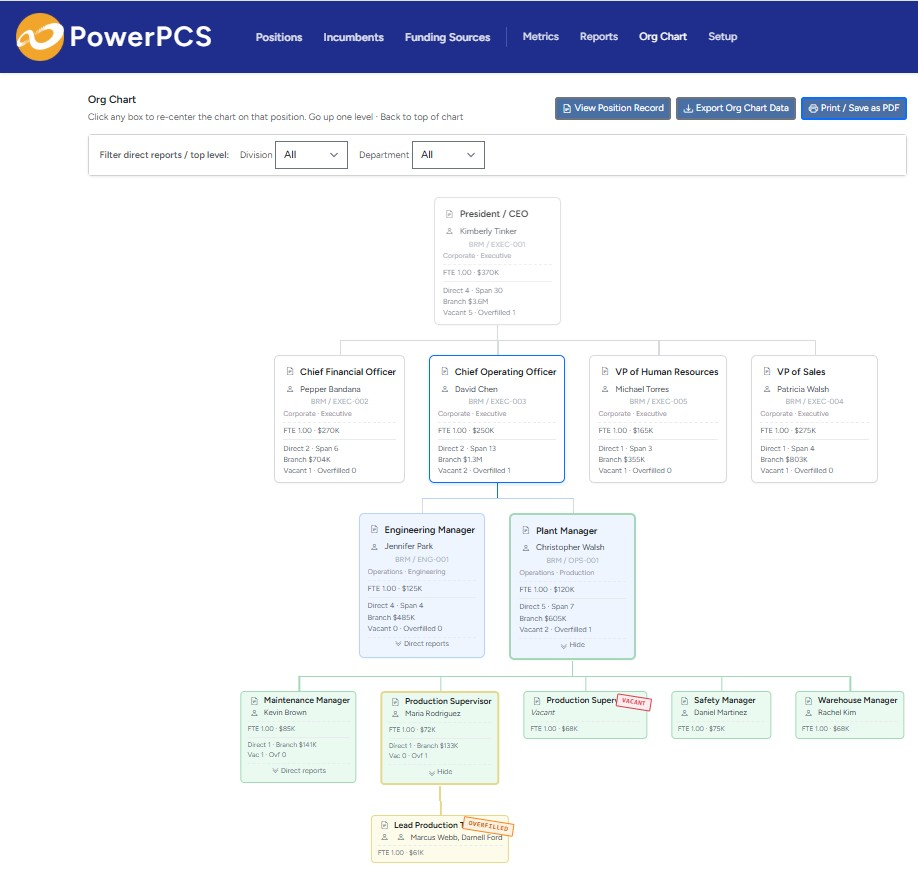
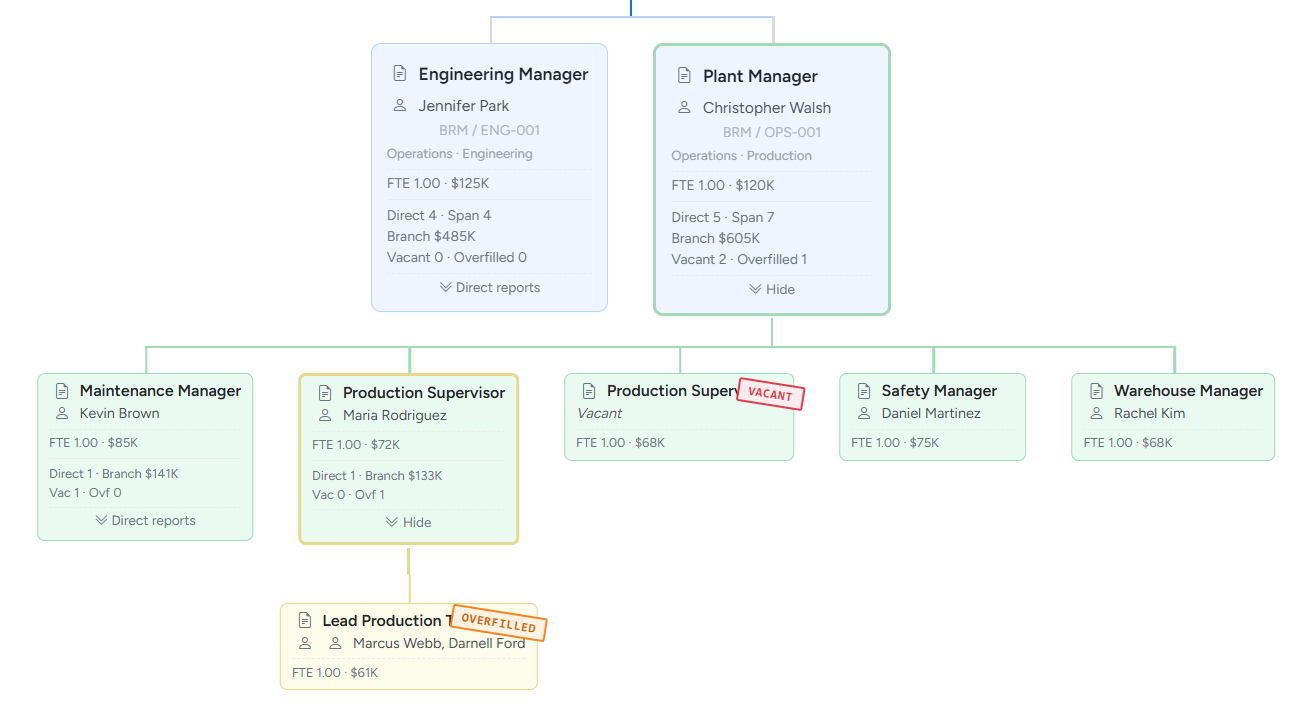
PowerPCS does establishment control end to end: it tracks each post, its funded FTE, its cost and funding source, its incumbent, and its filled / vacant / over-established status, with just enough org chart to see the structure and roll cost and vacancies up each branch. It deliberately does not try to be your HR or payroll system — you already have one for people records, leave, and pay. PowerPCS sits next to it and answers the question those systems answer badly: can we afford our establishment, and is every post authorised and filled?
Billing and language. PowerPCS is an English-language product billed in US dollars, used the same way anywhere — the establishment-control discipline doesn't change across borders the way payroll and tax do. There are no sales calls and no setup: you register, and it's running the same day. Overseas cards are accepted; you're charged the flat monthly price in USD.